
The Mother Who Comforted Him
The RoomThis thread traces the protagonist’s dependence on his mother’s childhood comfort, his growing shame and resentment, and the loneliness that remains when he can no longer reach that early security.
increasing Bearing strength in each event
 decreasing
Bearing strength in each eventdecreasingA Child Seeks Comfort
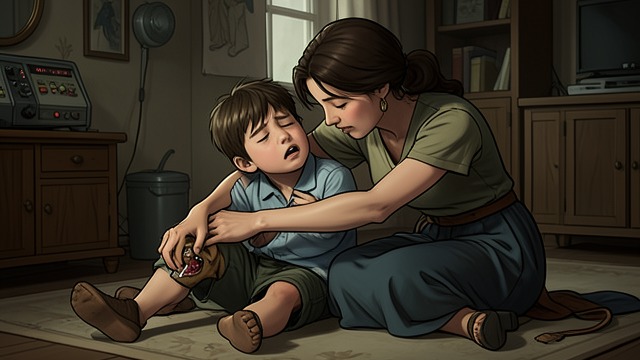
A Child Seeks Comfort
Fear and refuge
When the young protagonist is frightened, his mother becomes the person who can calm him. After a dog bites him, she holds him, rubs his head, and soothes him while he struggles to explain what happened.
The meaning of her care
Her steady attention gives him a temporary refuge from bodily pain and panic. The memory later returns with striking sensory tenderness, making maternal comfort one of the few early experiences he can vividly recover.
The closeness is not a solution to his fear, but it teaches him to associate his mother with safety. That association persists even as his later memories become more confused and painful.
Fear of Separation
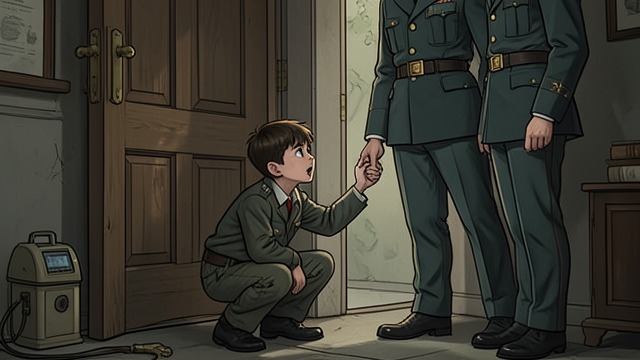
Fear of Separation
The imagined loss
When two police officers arrive at the family home, the boy assumes they have come to punish him for fighting Angelo. He sees them as enormous figures filling the doorway and fears that his mother will let them take him away forever.
A memory corrected
His mother explains that the officers only want to ask about a dog bite. The misunderstanding eases, but the memory preserves how quickly he imagines losing her and how completely his sense of safety depends on her presence.
The episode binds maternal attachment to fear of authority. In adulthood, his fantasies repeatedly turn on being trapped, judged, and separated from the world beyond his cell.
Shame at the Table
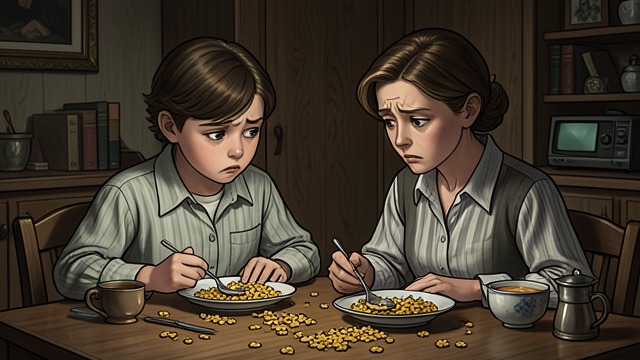
Shame at the Table
What he cannot tell
After his detention in Providence, the young protagonist returns home carrying a secret he cannot explain. At breakfast, he pushes his cereal around while his mother asks whether he feels ill and urges him to eat.
Care becomes pressure
Her concern makes him feel more exposed rather than understood. He snaps that he is not hungry and asks her to leave him alone, then retreats to his room while imagining her sadness at the table.
The scene reveals the distance between her attempt to care for him and his inability to accept or explain that care. His shame turns an ordinary family moment into another reason to hide.
The Unanswered Plea
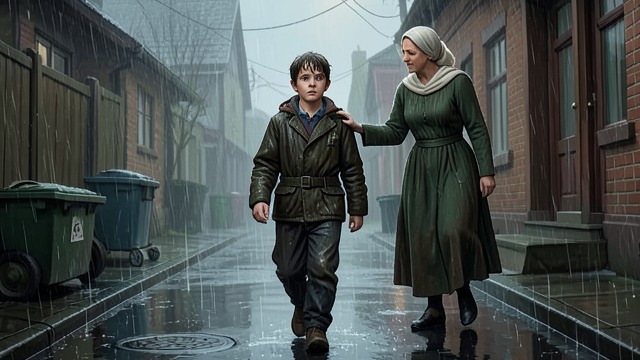
The Unanswered Plea
A child in trouble
In another memory, the protagonist walks home in wet clothes, dreading his mother’s questions. He imagines explanations and escape routes but cannot make himself speak plainly until she notices what happened.
Comfort mixed with punishment
His mother responds with a spanking and sends him to wait for his father, even as the family eventually washes him and puts the incident behind them. For the boy, care and discipline arrive together, leaving him anxious about being discovered and blamed.
The memory helps explain why he experiences attention as both needed and threatening. He wants someone to protect him, yet expects closeness to expose him to judgment.
A Motherless Feeling

A Motherless Feeling
The language of abandonment
After the breakdown, the protagonist hears himself imagine that he is always wrong and that nothing he does can succeed. A song about feeling like a motherless child accompanies this recognition of loneliness.
Comfort replaced by sickness
He no longer turns toward a remembered scene of his mother’s embrace. Instead, he describes sickness as a constant companion, something inside him that will remain when people and hopes cannot be trusted.
The shift does not prove that his mother has disappeared from his life; it shows that the remembered bond can no longer protect him from the present. His final retreat is inward, toward a substitute source of familiarity that offers no real consolation.
During his early childhood
At about eight years old
After his adolescent detention in Providence
During the later childhood memories in the cell
Near the end, after his cell crisis
